Richard McDonoughSenior Global Real Estate Advisor
Selling Luxury Homes in the St. Croix Valley: The Complete 2026 Guide
Selling a significant home is a different job than selling a house. Different buyer, different marketing, different negotiation, different risks — and in 2026, a St. Croix Valley luxury market that has quietly split away from the market beneath it. This is the complete playbook, from a fourth-generation Stillwater broker who has spent thirty-three years running it.
Is It Still a Good Time to List Your Home?
Short answer: yes — if your home is genuinely a luxury home, and if you launch it correctly. The St. Croix Valley's overall market has moved to the edge of balance in 2026: our Market Action Index has slid from the high 50s toward roughly 44, and inventory has reached a two-year high. That softening is real, and I will not talk around it. But it is a mid-market story. The luxury home runs on a fuel the market beneath it does not have — scarcity — and scarce assets do not follow the average.
What has changed is not whether you can sell. It is how much the launch matters. In 2024 a mispriced luxury listing was rescued by momentum. In 2026 it simply sits, ages, and eventually sells below the honest number. The window is open. The margin for error is not.
The Guide in Six Lines
- Scarcity beats averages. River frontage, view bluffs, historic stone, and true acreage cannot be rebuilt. That pool stays thin even as general inventory swells.
- The first two weeks decide the year. The strongest offers arrive in the first fortnight or after a repositioning — almost never in between.
- Fall is not the off-season here. Post-Labor Day through mid-November is one of the Valley's most serious buyer windows, and the least crowded.
- Your ceiling buyer probably isn't local. Local demand sets your floor; imported demand sets your ceiling. That is what a global brand is for.
- Photograph now, list later. Green grass, open pools, and October color are twelve-month assets captured in a two-week window.
- Not every sale should be public. The Quiet Listing Network sells significant homes with no showings, no internet photography, and no public days-on-market.
First, Understand the Market You're Actually In
The Valley's overall market has traveled to the edge of balance this year. Our Market Action Index moved from the high 50s to roughly 44 — the line between a seller's market and a neutral one — while inventory reached a two-year high. Any advisor who tells you otherwise is selling you something.
But averages deceive, and in the St. Croix Valley they deceive badly. A single ZIP code here contains a $340,000 rambler four blocks from the Lift Bridge and a $2.4 million bluff property with three hundred feet of river frontage. Blend them into one index and you learn nothing useful about either.
The luxury home runs on a different fuel: scarcity. Consider what actually trades at the top of this market — frontage on the St. Croix, a genuine view bluff above the valley, an 1870s lumber-baron house in Stillwater's Historic Hill district, ten wooded acres in Marine on St. Croix or Afton with a conservation easement on three sides. None of it can be built again. The National Park Service designation on the Lower St. Croix, Washington County's shoreland ordinances, and the simple geologic fact that there is only so much bluff face mean the supply of these homes is fixed at roughly the number that exists today.
| Factor | Broad Market (Mid-Bracket) | Luxury Home |
|---|---|---|
| Supply direction | Rising — two-year inventory high | Structurally fixed; irreplaceable inventory |
| Buyer pool | Largely regional and rate-sensitive | National, often cash or equity-driven |
| Effect of a soft index | Direct — negotiating power shifts to buyers | Indirect — punishes presentation, not the asset |
| Cost of mispricing | A few weeks and a modest reduction | Months, a public reduction, and a permanent discount |
| Where the ceiling price comes from | The local pool | The imported buyer |
Market direction per Altos Research, Stillwater 55082, week of August 24, 2026. Bracket characterizations reflect my own transaction experience in the Valley and are not statistical claims.
Luxury Home sellers retain real pricing power in 2026 — but only when the property is presented and priced as the scarce asset it is. Treat a significant home like ordinary inventory, and a balancing market will treat it accordingly.
The Stillwater Calendar: Why Fall Is Not the Off-Season
Every year around Labor Day, someone asks me whether they've "missed the window." Every year I give the same answer, and every year the fall closings prove it out.
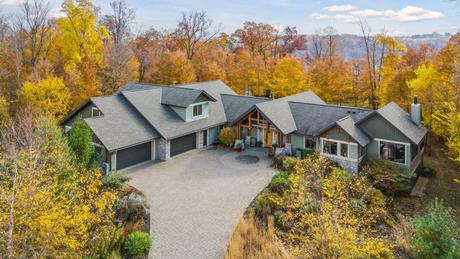
Here is what actually happens in the Valley after Labor Day. The tourist traffic thins on Main Street. Lumberjack Days is behind us, the Lift Bridge lifts on a quieter schedule, and Lowell Park empties out. Casual traffic disappears — and so do casual buyers. The people still touring homes in October are relocating executives with a January start date, families targeting a second-semester school transfer, and empty-nesters who spent the summer deciding. They are fewer in number and dramatically higher in intent.
Meanwhile your competition thins too. Sellers who listed in May and didn't perform pull off the market to "try again in spring." Sellers who were going to list decide to wait. For a well-prepared luxury property, the fall market is the rare moment when serious demand and thin supply meet in the same eight weeks.
What the seasons actually do to a Valley listing
| Window | Buyer character | Strategic use |
|---|---|---|
| Late Aug – Sept | Post-Labor Day reset; motivated and organized | Strongest fall launch window. Grass is still green, pools are still open, foliage is still full. |
| October | Thinner traffic, far higher intent | Peak color as a marketing asset; least competition all year. |
| Nov – Dec | Small pool, high urgency (tax-year, relocation deadlines) | Excellent for quiet/off-market sales. Public launches usually better held. |
| Jan – Feb | Serious relocation buyers, bare landscape | Viable only with archived green-season photography on file. |
| Mar – June | Largest pool — and the largest competing supply | The default. Requires the sharpest pricing precision because everyone is watching. |
No obligation · Entirely private
The Equity & Strategy Review
Thirty minutes at your kitchen table or on a call: what your home would command in today's market, your true equity position after costs, and my candid recommendation — sell now, sell later, or don't sell. It's the same annual review I run for my own family, and roughly a third of the time my honest answer is "wait." You will never hear a listing pitch from me on this call.
Call or Text 612-819-3518Request a Review[email protected] · richardmcdonough.com
The Preparation Sequence That Pays for Itself
Almost everything that determines your outcome happens before a single buyer sees the property. Here is the sequence, in order, with the reasoning behind each step.
1. The walkthrough — 60 to 90 days before launch
We tour the property together, room by room and outside in, and build a short, ruthlessly prioritized punch list: only work that returns more than it costs. In the luxury homes this is rarely renovation; it's refinement. Lighting temperature made consistent. Deferred trim painted. A cluttered sightline cleared so a buyer's eye travels to the river instead of stopping at a bookshelf. I will actively talk you out of the $40,000 kitchen you were about to do — because in this bracket, buyers at your price point intend to make their own choices, and your renovation frequently prices against you.
2. The pre-listing inspection
The cheapest insurance in luxury real estate, and the single item I argue for most often. The logic is simple and it is about leverage, not honesty. A surprise found by the buyer's inspector arrives at the worst possible moment, gets priced with fear-math, and hands maximum leverage to the other side. The same surprise found by our inspector gets fixed for a few hundred dollars — or disclosed up front alongside a real contractor bid, which converts an open-ended fear into a known number. Drama removed, contract price protected.
In Valley properties specifically, I am watching for the recurring items: septic compliance in the townships, well testing, ice-dam and roof history on the bluff exposures, drain tile and grading on sloped lots, aging shoreline structures and their permit status, and — in the historic homes — knob-and-tube remnants, galvanized supply, and original window condition.
3. Documentation and the title check
Before we launch, we assemble the file: improvement receipts and dates, permits, survey, easements, HOA or road-maintenance agreements, shoreland and setback documentation, utility histories, and — for river and bluff properties — anything relating to the Lower St. Croix National Scenic Riverway. Title problems in the Valley's older parcels have a way of surfacing at the worst moment; finding them in week one costs a phone call, finding them in week nine costs the deal.
4. Presentation and staging
Luxury home staging is about light, sight lines, and restraint — letting architecture and setting do the talking. The goal is not to fill the house; it is to clear the path between the front door and whatever makes the property irreplaceable. If the reason someone will pay your number is a view, then every decision in that room serves the view.
5. Photography, timed to the hour
The first showing now happens on a screen, often a time zone away. That screen is the entire first impression, and it deserves the same seriousness as the house itself. We schedule photography for the hour your specific rooms and views perform best — which in a west-facing bluff home is not the same hour as an east-facing one — and we shoot the exterior when the landscape is at its annual peak.
Photograph Now, List Later: The Twelve-Month Asset
This is the single most actionable piece of advice in this guide, and the one almost no one acts on in time.
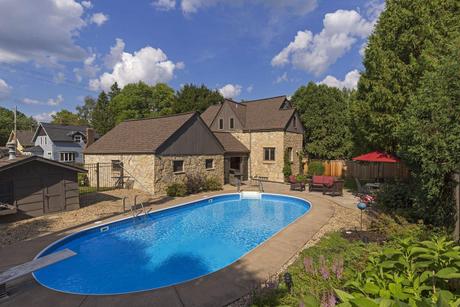
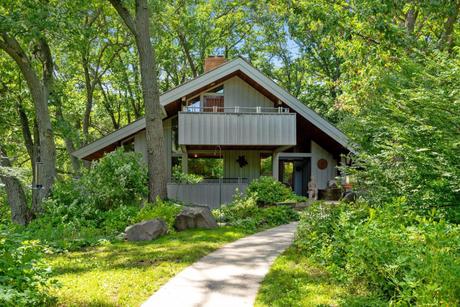
If there is any chance you will sell in the next eighteen months — spring, next fall, or someday — have your exterior photographed now, while the landscape is alive. Green lawns, mature canopy, blooming beds, an open and sparkling pool. These images cost you nothing to bank and they cannot be recreated in February at any price. A January listing supported by archived summer photography looks like a beautiful property. The same January listing shot in January looks like gray sticks and a snowbank.
A note on ethics and accuracy
Using seasonal or archived photography is entirely appropriate — and I use it constantly — provided it is honest. My standing practice, and the standard I hold my vendors to under NAR Article 12, is that any image not taken in the current season is captioned with the month and year it was made, and any digitally enhanced image (sky replacement, virtual staging, or twilight conversion) is disclosed as such. A buyer flying in from Denver should never feel a surprise when the car turns into your driveway. That discipline is not a constraint on marketing; it is what makes the marketing believable.
Pricing: The First Price Is the Marketing
The most expensive sentence in the Valley this year is "let's just try the higher number first."
Here is why it costs so much in 2026 specifically. In a market at the edge of balance, buyers — and more importantly their agents — watch days-on-market like a ticker. Every portal displays it. Every buyer's agent opens the conversation with it. A listing at 60 days is not perceived as patient; it is perceived as flawed, and the offers that eventually arrive are priced against that perception rather than against the property.
A launch price set to live weekly data creates urgency, multiple parties, and competition. A hope-based price creates a stale listing that sells below the honest number anyway — after months of carrying costs, a public reduction, and a permanent story attached to the address.
The rule from thirty-three years of Valley launches: the strongest offers arrive in the first two weeks or after a repositioning — almost never in between. Price to make the first two weeks count.
How I actually set the number
- Comparables, then correction. True luxury home comps in the Valley are thin, so raw comps are a starting point, not an answer. I adjust for the things that actually drive value here: frontage quality and usability, elevation and view corridor, privacy, and architectural significance.
- Live absorption data. Weekly Altos Research figures for 55082 — inventory, price-per-square-foot direction, and Market Action Index — tell me what the market is doing this week rather than last quarter.
- The pending set. What is going under contract right now, and at what pace, is a better forecast than what closed ninety days ago.
- Search-boundary logic. A home priced at $1,265,000 disappears from every buyer who capped their search at $1.25 million. I will not lose your entire top-of-funnel audience for $15,000 of ego.
- A pre-agreed response plan. Before we launch, we agree on what we do at day 14 and day 30 based on showing counts and feedback. Deciding that in advance, unemotionally, is what prevents a slow drift into a stale listing.
Marketing: Your Ceiling Buyer Probably Isn't Local
The local buyer pool sets your floor. The imported buyer sets your ceiling.
Who is the imported buyer in the St. Croix Valley? The relocating executive whose company sits on the east metro corridor. The Minnesotan who left for Chicago or Dallas twenty years ago and is coming home with coastal-adjacent equity. The out-of-state family who ran the arithmetic on what $1.8 million buys on the St. Croix versus a lake in the Rockies or a suburb of Boston, and could not believe the answer. These buyers are not reading the Stillwater Gazette. They will never drive past your sign.
Reaching them is precisely what a global brand is for. Sotheby's International Realty is not a logo I rent; it is a distribution system. A significant Valley property under this banner is syndicated into a network spanning roughly 1,100 offices in 84 countries and territories, presented on sothebysrealty.com alongside properties from Aspen to Provence, and distributed to the international and financial media partnerships the brand maintains — the audience of people who buy at this level, reached in the presentation they expect. The name on the sign carries 280 years of association with objects of consequence, and buyers at this price point respond to that association whether or not they can articulate why.
This is not brochure talk. It is arithmetic I watch play out yearly. Some of the strongest closings of my career came from buyers no local marketing would ever have touched — and in each case, the difference between the local ceiling and the imported ceiling was six figures.
What a full launch includes
- Architectural photography, drone, and — where the property warrants — cinematic video and floor plan.
- Sotheby's International Realty global syndication, plus the full domestic portal set.
- A dedicated property narrative written for the buyer who has never seen Minnesota.
- Targeted digital distribution built for housing compliance (Special Ad Category rules, minimum radius, no demographic targeting).
- Direct agent-to-agent outreach to the specific brokers who represent relocation and luxury home buyers in this corridor.
- Print placement where it still works, which in this Valley is narrower than most agents admit — and I will tell you honestly where it doesn't.
The Private Alternative: Quiet Sales
Not every significant sale should be public.
For owners who would sell at the right number but want no showings, no photography circulating on the internet, and no neighbors counting their days-on-market, an off-market sale through a private network matches the property directly with qualified buyers. If the number isn't met, nothing happens — and no public record of the attempt exists. Your home is never "the one that didn't sell."
The people who use this are usually in one of four situations: a household change they'd rather not announce, a business or public profile that makes an open house untenable, a property so distinctive that the buyer pool is a list of names rather than a market, or simply a price at which they would sell and below which they would not. In a balancing market, this option's value rises sharply — because the cost of a failed public launch has risen sharply too.
By introduction · Off-market
The Quiet Listing Network
A private channel connecting luxury St. Croix Valley properties with qualified, pre-screened buyers — without a public listing, public photography, or a public days-on-market count. Sellers set the number. Buyers come by introduction only. Nothing happens unless it happens on your terms.
Ask About the Quiet Listing NetworkCall or text 612-819-3518 · [email protected]
Negotiation: Whoever Brings the Better File Wins
Luxury home negotiations are won months in advance — with the pre-inspection report, the contractor bids, the documented improvements, the survey, the permit history, and the data trail behind the price.
When the inevitable moment of friction arrives — and it always arrives, in the form of an inspection item, an appraisal question, or a timing conflict — the side arguing from documents beats the side arguing from fear. Every time. A buyer who says "we're concerned about the roof" is making an open-ended claim worth whatever they decide it's worth. A seller who responds with a two-year-old invoice, a transferable warranty, and an independent inspector's note has converted that claim into a closed question.
Building that file is the unglamorous core of my job, and it is why my sellers' contract prices tend to survive to closing. The number you celebrate on acceptance day only matters if it's still the number on closing day.
Micro-Markets: What Actually Moves Value Across the Valley
People say "the St. Croix Valley" as if it were one market. It is at least six, and they behave differently enough that a strategy built for one will underperform in another.
| Community | What the luxury buyer is buying | Seller's leverage point |
|---|---|---|
| Stillwater | Historic Hill architecture, bluff views over the river, walkability to Main Street and Lowell Park | Provenance and view corridor. Document the house's history — it is worth real money here. |
| Marine on St. Croix | Village scale, deep privacy, land, proximity to William O'Brien | Acreage character and the quality of the approach up the driveway. |
| Afton | Rolling acreage, equestrian and hobby-farm potential, valley views, quick access to the metro | Usable land versus raw land. Buyers pay for what they can actually do. |
| Lake Elmo | New and newer construction, larger parcels, Stillwater-area schools, easy 694/94 access | Build quality and systems documentation; this is the most comp-driven sub-market. |
| Bayport | River access, value relative to Stillwater proper, established neighborhoods | Frontage or view proof, and honest positioning against Stillwater comps. |
| Oak Park Heights | Convenience, newer inventory, bridge access to Wisconsin | Condition and turnkey readiness — this buyer is efficiency-minded. |
Because I am licensed in both Minnesota and Wisconsin, I also work the cross-river dynamic directly — which matters more than people realize since the new bridge opened. A Valley seller whose most likely buyer is currently living in Hudson or River Falls needs an advisor who can actually operate on both banks.
Five Ways Luxury Home Sellers Lose Money in a Balancing Market
- Testing a price. There is no such thing as a free test. The test costs you the first two weeks of attention, which is the most valuable inventory you will ever own.
- Launching before the file is built. Going live without the inspection, documents, and photography in hand means the first serious buyer meets an unprepared seller.
- Over-improving to sell. The renovation you do for a buyer is a renovation done to someone else's taste with your money.
- Confusing showings with progress. Twelve showings and no offers is not activity; it is twelve buyers telling you something specific. I will tell you what they said even when it isn't pleasant.
- Marketing only to the neighborhood. Stopping at the local MLS chooses the local floor on purpose.
Your 90-Day Launch Timeline
| When | What happens |
|---|---|
| Day –90 | Equity & Strategy Review. Walkthrough and punch list. Decision on public launch vs. Quiet Listing Network. |
| Day –75 | Pre-listing inspection ordered. Contractor bids gathered on any disclosed items. |
| Day –60 | Punch-list work begins. Document and title file assembled. Landscape brought to peak. |
| Day –30 | Staging and final refinement. Exterior photography captured while the landscape is alive. |
| Day –14 | Interior and drone photography, video, floor plans. Property narrative written. Pricing finalized against live weekly data. |
| Day 0 | Global launch. Sotheby's International Realty syndication live. Agent-to-agent outreach begins. |
| Day 1–14 | The window that matters. Maximum showing availability, daily feedback, active pursuit of every inquiry. |
| Day 14 / Day 30 | Pre-agreed checkpoints. Data reviewed, strategy confirmed or repositioned — unemotionally, as decided in advance. |
Why Fourth-Generation Matters Here
I am a fourth-generation Stillwater resident. My family has been in this valley for over a century, and I have spent thirty-three years selling homes in it — through the boom, the crash, the recovery, the pandemic surge, and now this balancing.
That is not a sentimental credential. It is a practical one, and it shows up in specific ways. I know which bluff lots have drainage histories that a buyer's engineer will find. I know which stretches of shoreline carry permitting complications and which don't. I know the difference between an 1880s house that was restored properly and one that was made to look restored. I know which appraisers understand a river property and which will comp it against a subdivision three miles inland — and I know how to build a file that keeps the second kind from costing you $80,000.
I also know what a buyer flying in from out of state actually needs to hear about living here: that the Lift Bridge still lifts, that Lumberjack Days shuts down Main Street every summer, that the ice goes out on the St. Croix sometime in March and half the town notices, and that Lowell Park on a September evening explains this valley better than any listing sheet ever could. Selling a significant Valley home is partly selling the Valley — and I don't have to research that part.
My standard is straightforward: Experienced. Resourceful. Innovative. And candid, which I consider the fourth. If your honest answer is "wait," I will say so, and I will tell you exactly what would need to change for the answer to become "now."
Frequently Asked Questions
Is it still a good time to list my home in Stillwater or the St. Croix Valley?
Yes, for well-prepared luxury properties. Inventory has reached a two-year high and the Market Action Index has softened toward roughly 44, which means buyers have more choice than they did — but that pressure falls mainly on ordinary inventory. Scarce properties (river frontage, view bluffs, historic architecture, true acreage) are not substitutable, so the softening shows up as a demand for correct pricing and presentation rather than a reduction in value. The window is open; the margin for error has narrowed.
How long does a luxury home sale take in this market?
Prepared and priced to live data: often days to a few weeks. Mispriced: months, plus a public reduction. The calendar is not the variable — the launch is.
Should I wait until spring to sell?
Usually not, and rarely for the reason people assume. Spring brings the largest buyer pool and the largest competing supply, which cancel each other out. Fall in the Valley brings fewer buyers of much higher intent against noticeably thinner competition. The stronger argument for waiting is readiness — if the preparation file isn't built, wait for the file, not for the season.
Can I photograph my home now and list it next spring?
Yes, and you should. Green lawns, full canopy, blooming beds, and an open pool cannot be recreated in winter. Capture them now and hold them. The only requirement is honesty: seasonal images should be captioned with the month and year taken, and any digital enhancement disclosed.
What preparation actually matters?
Four things: a prioritized walkthrough punch list, a pre-listing inspection, restraint-driven staging that protects sight lines, and photography timed to your home's best light and best season. Days to weeks of work, typically returning multiples of cost.
Do Valley luxury homes really sell to out-of-area buyers?
Regularly — and they routinely set the ceiling price. Relocating executives, returning Minnesotans, and out-of-state families comparing equity value drive a meaningful share of luxury home closings here. Marketing that stops at the local MLS chooses the local floor on purpose.
Can I sell without listing publicly?
Yes — privately, through a qualified-buyer network, with zero public exposure if the number isn't right. Through the Quiet Listing Network there is no public photography, no public days-on-market, and no record of an attempt that didn't happen. It is an increasingly common choice for significant Valley properties.
Will an in-ground pool help or hurt my sale in Minnesota?
It depends almost entirely on presentation and season. Photographed open, in use, under a summer sky, a pool reads as a lifestyle asset. Shown covered in November, it reads as a maintenance liability — and buyers price liabilities aggressively. If you own a pool and plan to sell within eighteen months, photograph it before the cover goes on.
What does it cost to sell a luxury home?
Beyond brokerage compensation, plan for seller-side closing costs, state deed tax, title and settlement fees, prorated property taxes, any negotiated buyer-agent compensation, and preparation costs. The number that matters is net proceeds, not gross price — which is why the Equity & Strategy Review produces a net figure rather than a headline. Specific tax and legal consequences should be confirmed with your CPA and attorney.
How do I find out what my St. Croix Valley home is worth right now?
Request an Equity & Strategy Review. Thirty minutes, entirely private, no obligation: current market value, your net equity position, and a candid recommendation to sell now, sell later, or hold. Call or text 612-819-3518.
The next step
Let's Find Out What Your Home Is Actually Worth
If you take one thing from this guide, take this: in a balancing market, the sellers who do well are simply the ones who prepared earlier. The photography, the inspection, the file, the price — all of it is decided long before a buyer ever appears. There is no penalty for being ready and choosing not to list. There is a significant penalty for the reverse.
So let's start with an honest conversation and no pressure. Thirty minutes, entirely private, no obligation — and if my recommendation is to wait, that's what you'll hear.
Call or Text 612-819-3518Book the Equity & Strategy Review[email protected] · richardmcdonough.com · Ask about the Quiet Listing Network